your condition. That includes understanding your symptoms and how RA affects your body. Knowing more can help you talk with your doctor about the treatment that’s right for you.
What Happens When You Have RA?
Normally, your immune system works to protect your body from foreign substances like bacteria, viruses, and germs. While the exact cause is unknown, when you have RA, your immune system attacks healthy tissue and cells in your body. That’s why RA is called an autoimmune disease.
RA primarily affects the smaller joints of the hands and feet. The membranes (thin tissue) around the joints become swollen and inflamed. This leads to the pain, stiffness, and swelling many people with RA experience.
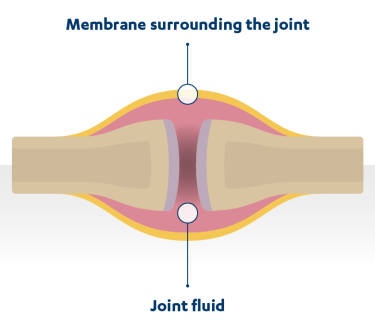
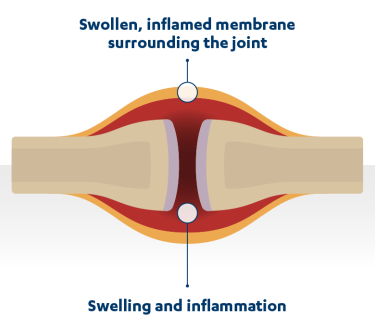
The symptoms of RA may include:
- Joint pain
- Tender, warm, swollen joints
- Morning stiffness lasting hours
- Weakness
Symptoms may affect both sides of the body
For example, if a joint in your right hand is inflamed, the same joint on your left hand may likely be inflamed, too. RA can occur in any joint. But it usually starts in joints in your fingers, hands, wrists, and feet.
The joints that RA affects can vary from one person to another. Some people have more severe symptoms than others or have symptoms more often. For many, stiffness is worse in the morning, or when they haven’t been active for a while.
RA Is a Chronic (Long-Term) Disease
RA is a chronic long-term disease. If the joint pain, stiffness, and swelling symptoms are not caught
early, they can worsen over time. That’s why early diagnosis and treatment are important. While there is no cure, there are medicines that can help relieve these symptoms. This may help you perform everyday activities with less difficulty.
Who Gets RA?
About 1.5 million people in the US have RA.

It affects more women than men.

RA usually starts between the ages of 45 and 64 years.*

*Based on data collected from Truven Health MarketScan® Research (n=157,634) and IMS PharMetrics Plus (n=139,300) databases
between 2004 and 2014.

Biologics—A Treatment Option
for RA
Biologics may help relieve the joint pain, stiffness, and swelling caused by moderate to severe RA. They are prescribed for people whose symptoms have not fully responded to other types of treatments. These medicines may include:
(conventional synthetic disease-modifying antirheumatic drugs)
such as methotrexate
and
sulfasalazine
Glucocorticoids (such
as prednisone and methylprednisolone)

Talking With Your Doctor
Your doctor needs to know about your symptoms and how they affect your everyday activities.
Be open and honest with your doctor about your symptoms.
Here are a few suggestions:
Write down the symptoms you’ve been having and make note of any new ones. Has anything changed since your last doctor visit?
Go into detail: If something hurts, describe how bad it is
Write down how symptoms affect your ability to do everyday activities
Make a list of the medicines you take, previous medical procedures, and your disease history
doctor about your treatment goals and the types of activities you’d like to get back to doing.